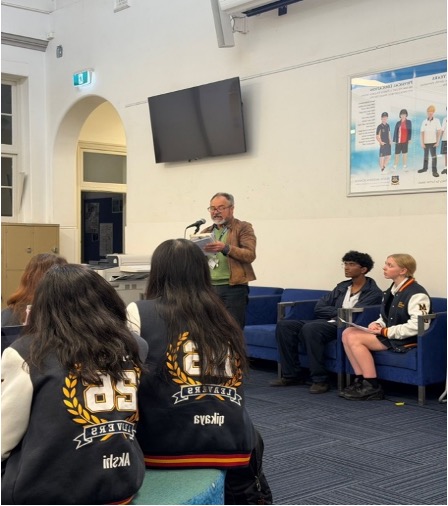
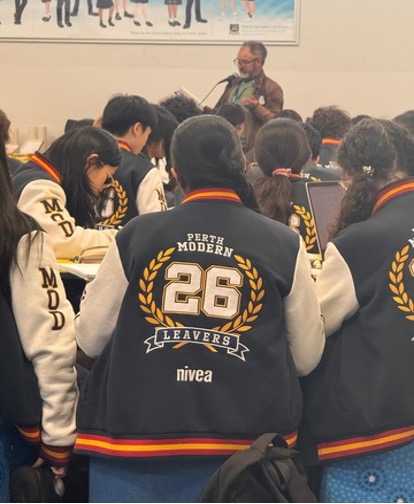
When Kim Scott visited Perth Modern earlier this term, I was ready. Pen in hand, dog-eared copy of True Country annotated, prepared to extract quotable wisdom from the Miles Franklin winner himself. What better way to nail my Lit assessment than hearing directly from the author?
That assumption was my first mistake. It is a common fault of year 12 Literature students, to make assumptions. We assume symbolic meanings, assume that authors camouflage truths within texts, and convince ourselves that wider reading will produce the correct interpretation.
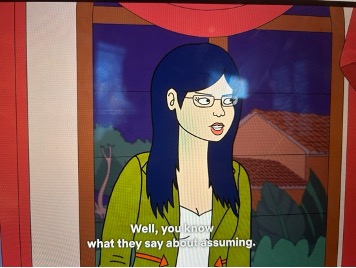
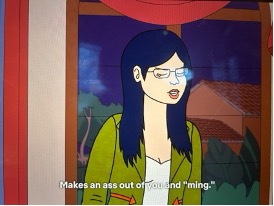
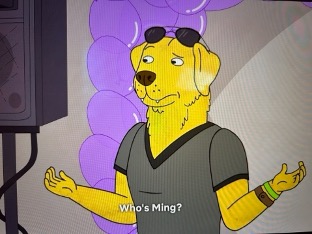
Diane Nguyen in ‘BoJack Horseman’ quipped: “When you assume, you make an ass out of you and me.” A little puerile? Sure, but true.
I had assumed Kim Scott would arrive exuding the polished confidence of someone who had reached the zenith of literary fame, armed with eloquent answers about reconciliation and identity, and ideally, a few quotable lines to borrow for my next essay…
Instead, we met a quiet man who apologised for his shyness, paused before answering, and listened instead of waxing lyrical about his achievements. To a student’s comment about True Country, he simply smiled and said, “That could be true,” vexing those of us who had hoped that he possessed the answers.
I was unsettled. If I had been so wrong about Kim Scott, what false assumptions had I brought to his novel? Meeting Scott, and reading True Country, challenged my assumptions about Indigenous experience and exposed my reliance on Western frameworks. Humility and doubt replaced confidence.
Country isn’t a Map
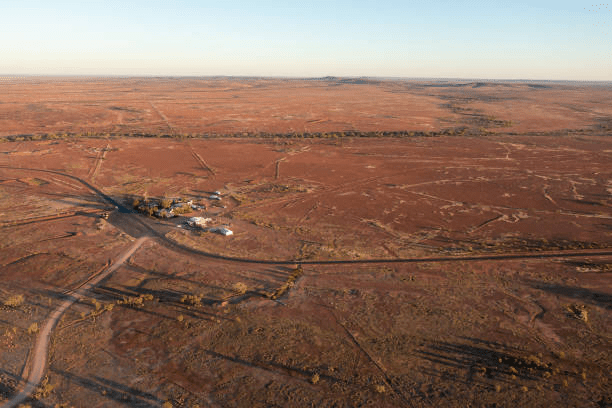
Billy’s “first impressions of Karnama were from above, over a map.” A map can identify Country, but does not explain it.

In retrospect, I realise that I had approached Indigenous Australia much as Billy had initially approached Karnama. As a child, I flew with my parents to remote WA, of which only vague memories linger. Those fragments of memory tended to confuse visiting with understanding.
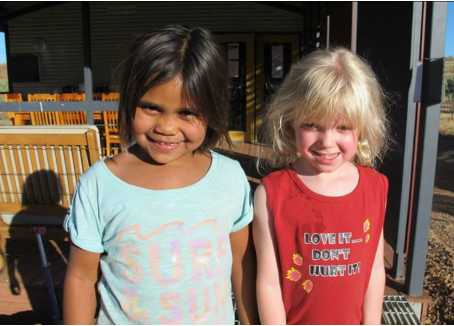
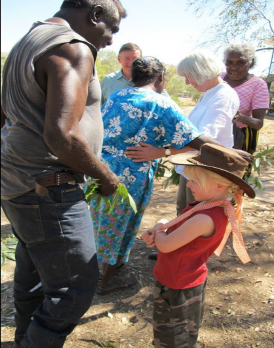
As students, we have taken part in discussions about reconciliation, constitutional recognition and Welcome to Country ceremonies. But knowing about a culture isn’t the same as understanding it.
This is especially pertinent to our Literature cohort, which lacks Indigenous representation. We are all, in a sense, distant (outside) the cultural experience that the novel represents. Whilst this does not deny us meaningful responses, it does require self-awareness of our distance from the subject.
At one point in the novel, an Elder asks Billy: “Tell us, we learned anything from white man yet?” That question confronts not only Billy, but us, the readers. We assume that Western education has all the answers because it has shaped us for thirteen years. Yet, why are Indigenous communities still living with the consequences of dispossession and cultural loss? Scott isn’t dismissing Western education altogether. He is questioning the assumption that it is the only valid knowledge system.
That, for me, was the first attack on my pre-existing assumptions. I had not simply lacked knowledge about Indigenous Australia; I had assumed that Western education brought understanding.
Lost in Translation
My second assumption was even more unsound.
I had assumed that True Country would explain Indigenous Australia to me.
That’s what we’re used to, right? Any unfamiliarity and we ask a teacher, Google it, (or ChatGPT it)?
But Scott refused to let his novel become Western-centric. He did not pause to define Nyungar words or justify Dreaming for a Western audience.
I wanted explanations and clarity.
If most of Scott’s readers are non-Indigenous Australians (as he admitted), why not make the novel easier for us? Why not translate and explain?
At this point, I confronted my assumption that I should be the ‘centre’ of the conversation.
Rather than comfortably re-centring Western readers through translation, Scott reverses the power dynamic by not explaining. We become the outsiders. We must sit with uncertainty.
The line, “That’s true. That’s no story, it’s true story,” challenged my instinct to interpret spirituality as symbolic.However, as our teacher Mr Barton pointed out, terms like ‘magical realism’ are Western labels. For the people of Karnama, these experiences aren’t magical, they’re real.
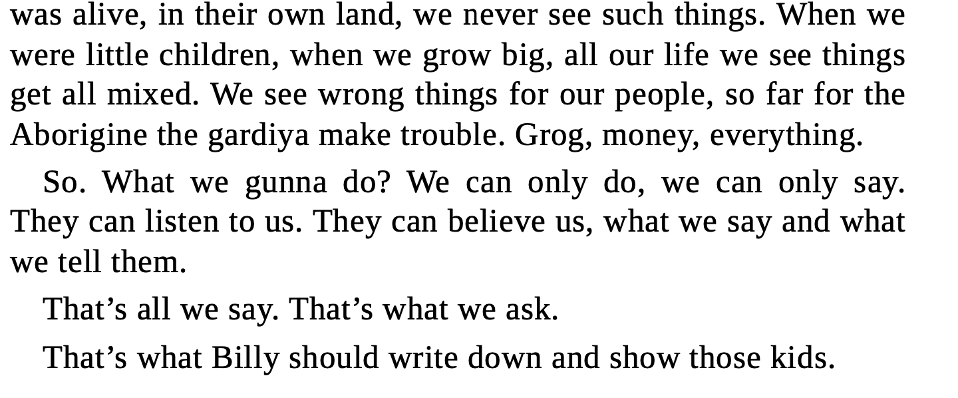
Billy arrives in Karnama believing that he has something to offer, an education, but in the end, he is not simply educating, he is listening and learning. As one Elder says, “They can listen to us. They can believe us, what we say and what we tell them… That’s what Billy should write down and show those kids.” Billy is not the expert. Nor the reader.
Rather than translating Indigenous experience into a form I could easily understand, Scott challenged me to question why I expected translation at all.
Beyond Statistics
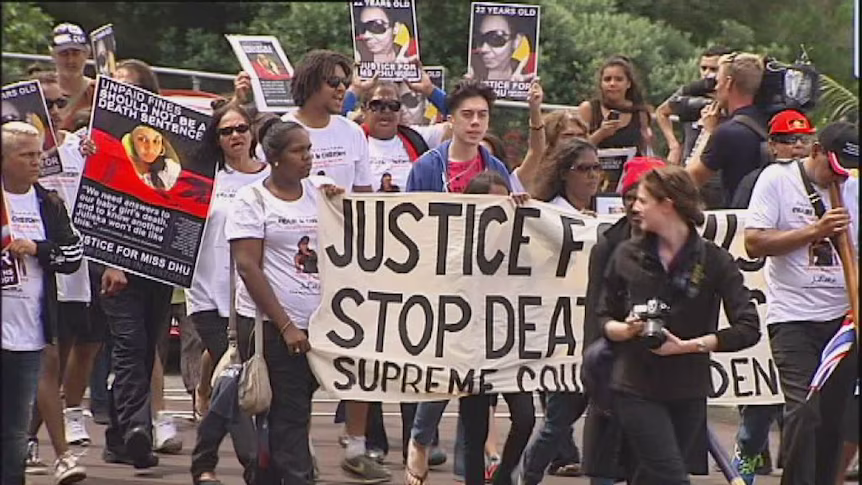
My conceptions altered when Kim Scott read aloud to our cohort about Franny. The young Indigenous boy who was killed. How often have we read of Indigenous youth incarceration and unnecessary deaths in Banksia? The statistics are mind-numbing…
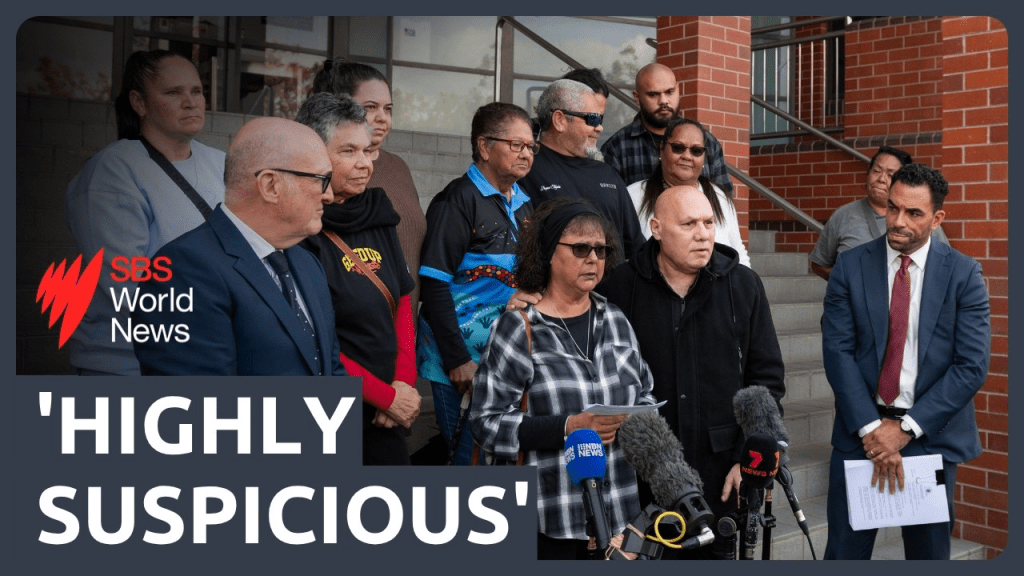
When Scott read to us of Franny’s death, the room was still, quiet. No one wrote.
We listened.
The words were direct. Scott refused to sanitise anything. Franny is punched “like a bag.” His throat is dehumanisingly cut “like he was bullock.” The blunt repetition of “he was dead dead dead” is ugly, obscene.
I had assumed that being informed about Indigenous people meant I understood its full gravity. Scott’s recitation of Franny’s death exposed the weakness of that assumption. Franny was no longer just a literary character or a statistic of Indigenous disadvantage, but a real boy.
With the line, “ We thought, you know, justice. White man’s justice… Silly buggers we be.” Here, Scott shatters another of my assumptions: that Australia’s legal system would deliver justice equally. Realisation of both the community’s misplaced trust and my own emotional distance forced me to recognise how superficially I had treated Indigenous suffering as something to analyse rather than confront and action.
Questions that Remain
I finished True Country with more questions than answers. I now view this as an achievement.
Kim Scott didn’t come to Perth Mod and hand us truth in a neat, quotable form. His novel doesn’t do that either. Instead, both he and his novel expose the fiction that knowing something about another culture means understanding it. For our non-Indigenous Literature cohort, that is important. True Country doesn’t ask us to become experts on Aboriginal experience. It asks us to be conscious of the assumptions we bring to the novel before we even open it.
My assumptions:
- That I understood Aboriginal culture.
- That the novel was written for my perspective.
- That understanding meant having answers.
Kim Scott’s visit profoundly influenced my reading of True Country . He didn’t proffer answers, but made me question myself and the assumptions that I had held.
And maybe that’s where true understanding begins?

